What Wildlife can You Spot in Your No Mow May Lawn
It’s not just our wonderful wildflowers which benefit from not mowing our lawns this May – our pollinators, birds and wildlife flourish when we manage our lawns for nature!
- Go to:
Pollinators and other wildlife bring our gardens to life with buzzing and fluttering along our lawns, borders and hedges.
From bees to butterflies, and beetles to hoverflies, the wildflowers keep them thriving in our neighbourhoods. Here are just a handful of the species which you can spot in your garden this May and beyond.
And if you haven’t already, why not join the No Mow Movement and help pollinators from home.

Speckled Wood Butterfly
The dappled pattern of the Speckled Wood is a sign that summer is on its way. With up to two generations of this sun-seeking butterfly being produced in a year, it’s crucial that its caterpillar food plants, long grasses such as False Brome Brachypodium sylvaticum, Cock’s-foot Dactylis glomerata and Yorkshire-fog Holcus lanatus are available. This is why leaving patches of long grass year around in your garden is so important!

Red-tailed Bumblebee
Living up to its name, this bumblebee can be seen across the UK in spring with its vividly red tail. Bumblebees like this one rely on a plentiful supply of our wonderfully wild plants such as Red Clover Trifolium pratense and Dandelions Taraxacum officinale to supply them with nectar and pollen. These are food sources for the bees and their larvae – next year’s buzzing bumblebees!
Play No Mow May Bingo

No Mow May Bingo
See how many you can tick off in your No Mow May garden or green space. Or why not make a game on a nature walk?

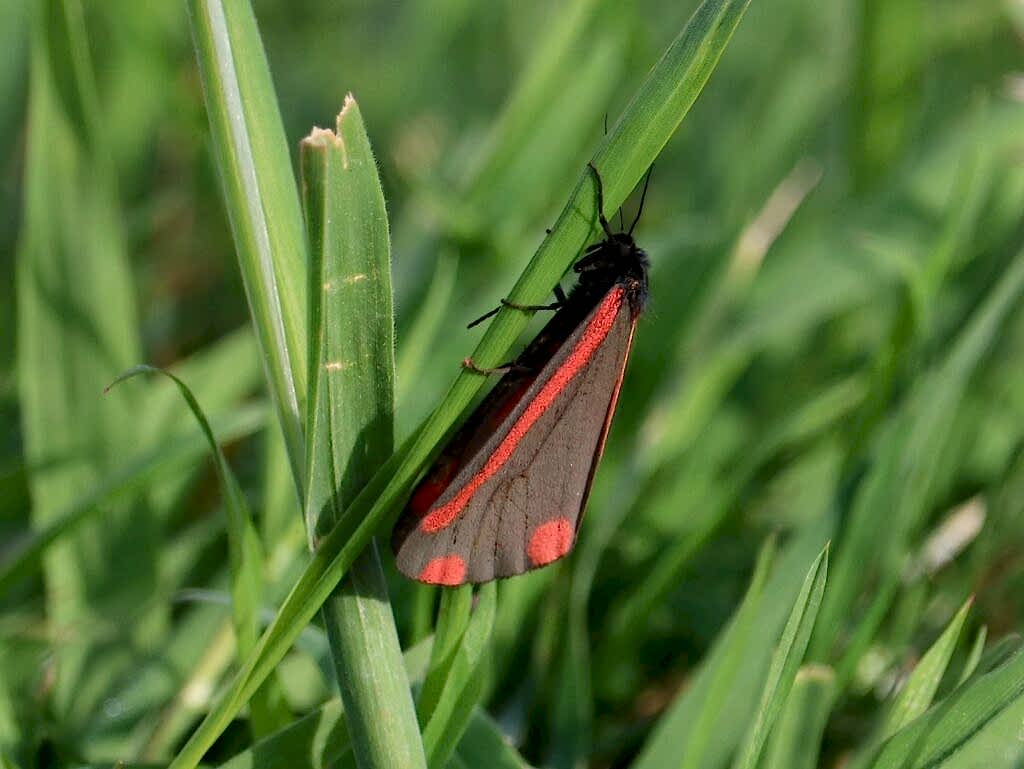
Cinnabar Moth
The life cycle of this bright and boldly patterned moth (pictured in the heading) relies entirely on one of our sunniest wildflowers – the yellow Common Ragwort Senecio jacobaea. Its tiger-striped caterpillars munch on this unpalatable plant before pupating underground over winter, ready to emerge as moths and put on another dazzling show next year.

Marmalade Hoverfly
This deliciously named hoverfly is one of our easiest flies to spot, identified by its black and orange bands and mesmerising levitating flight. Despite being disguised as a wasp, this friendly pollinator relies solely on nectar from flat flower heads such as Common Ragwort Senecio jacobaea and Cow Parsley Anthriscus sylvestris.

Cockchafer Beetle
Commonly known as the May Bug, these chunky red/orange beetles only live for 5-6 weeks. Despite their short lives above ground, females rely on grassy areas such as lawns to lay their eggs, where the larvae develop hidden deep underground for up to 5 years. Look out for them on warm evenings, perhaps bumping into your lit window!
Make the No Mow May Pledge
Plantlife’s No Mow Movement is here – let’s let it grow for nature! Pledge to take part today and get a FREE No Mow May guide.
It’s one of the easiest ways to connect with wildlife and the perfect way to start supporting nature in your garden (in May and beyond!).