
Seaton Meadows Nature Reserve
Location: Near Harringworth, Rutland
OS: SP 913979
What Three Words location: ///shun.theme.retailing
Habitat: Hay meadow and flood meadow
- Go to:
The Reserve
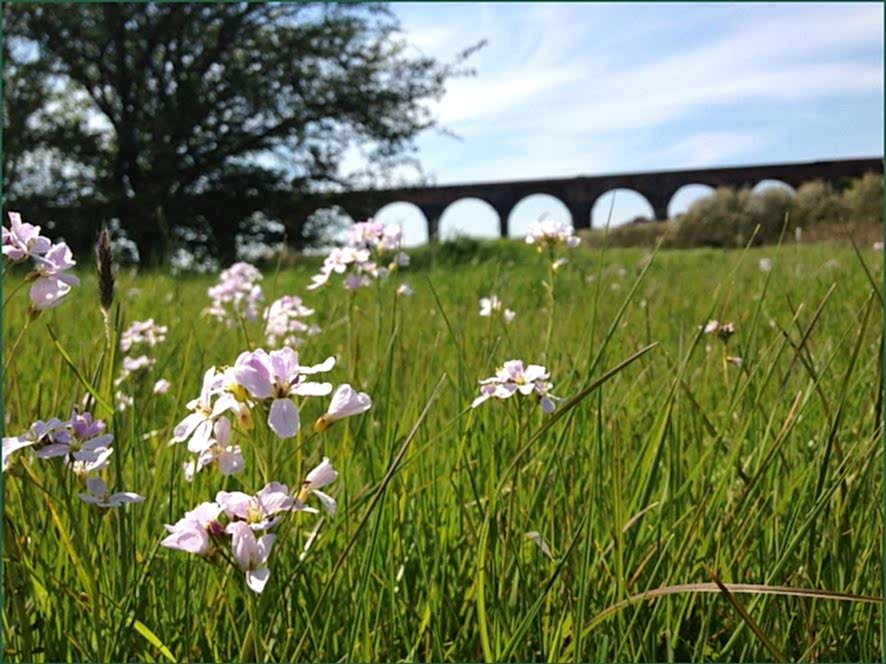
The arches of the Welland Railway Viaduct rise 21m above the River Welland and neatly separate the two hay meadows that make up this reserve.
The meadows long pre-date this magnificent act of engineering. From the air, there is a faint pattern of ridge and furrow ploughing is visible, perhaps dating from medieval times.
Habitat
The low-lying land near the Welland regularly floods and around 16 acres of the reserve is flood meadow. Where the clay of the higher part of the land meets the silt by the river, there’s an area where water oozes from below the clay.
The susceptibility of the land to flooding made intensive agriculture impractical and sympathetic former owners maintained traditional meadow management.
From December to July, the two fields are left ungrazed to encourage a rich hay crop of grasses and herbs. This also helps the rich flora of the site and produces good breeding conditions for birds like snipe.
Around late July, the hay is cut, helping distribute seeds of the meadow plants. Then sheep and cattle are briefly allowed on the land in what is called aftermath grazing, before the fields are shut up once more.
Seaton Meadows is the last example of this kind of meadow in the Welland Valley.
Species to look out for
- March – June : Marsh-marigold Caltha palustris
- June – July: Great Burnet Sanguisorba officinalis
- July: Common Meadow-rue Thalictrum flavum
Visit


Looking across the meadows to the viaduct

Wildflowers at Seaton Meadows

The meadows in full bloom

A close up look at some of the wildflowers

Train passing over the viaduct at Seaton Meadows

A bee enjoying the wildflowers

Working on the reserve at Seaton Meadows

Pollinators enjoying the summer blooms at Seaton Meadows

24 Plantlife